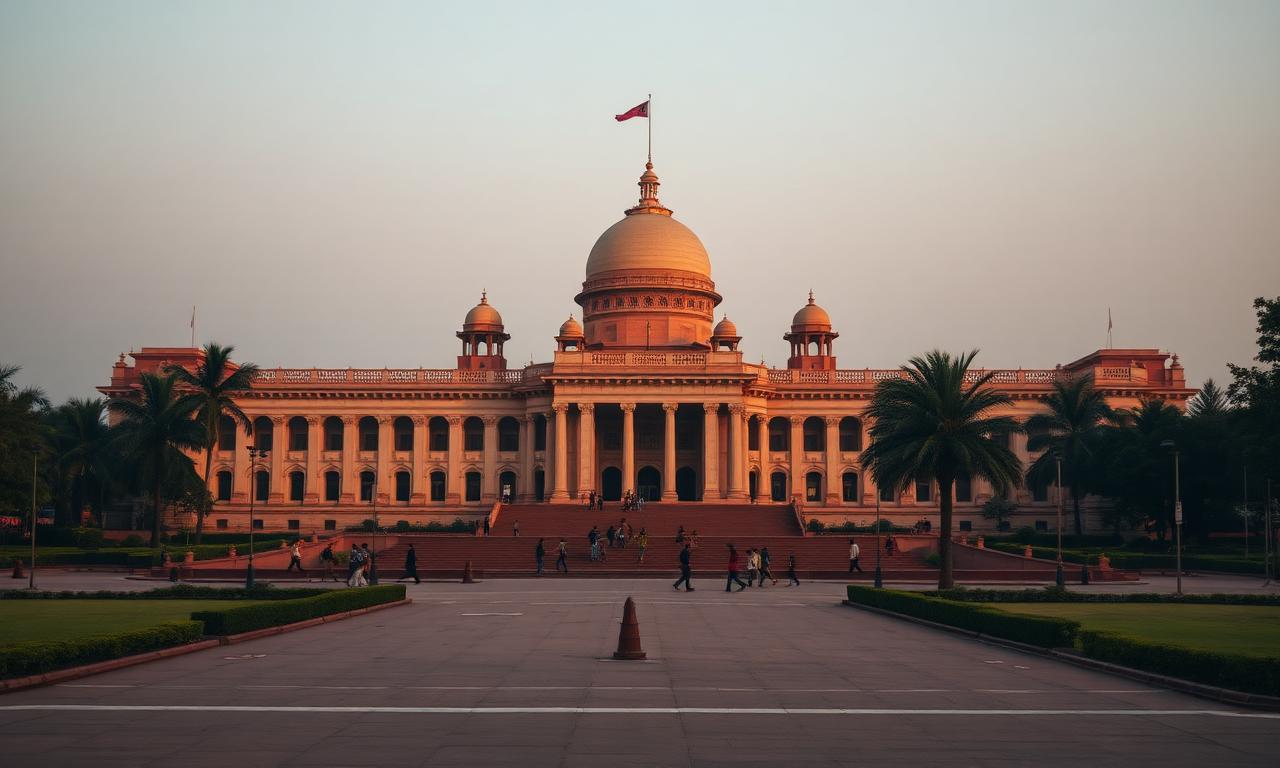


New Delhi witnessed a persistent stand-off this week as the Cockroach Janta Party (CJP) continued its vocal protests at Jantar Mantar, rejecting an invitation for dialogue from the Central Government. The administration, through Union Minister Jitendra Singh, extended an offer for talks to be held at the residence of BJP President J.P. Nadda, aiming to de-escalate the burgeoning student agitation.
The CJP, a prominent student organization, has been at the forefront of a movement demanding a raft of concessions, including the resignation of the Union Education Minister. Their core grievances revolve around what they term as systemic issues in higher education, advocating for enhanced student rights, improved campus facilities, and a review of recent policy decisions affecting academic institutions. The party's steadfast refusal to engage in discussions without their preconditions being met highlights the depth of the distrust and the rigidity of their stance.
Union Minister Jitendra Singh, addressing the media on Thursday (July 23, 2026), emphasized the government's commitment to democratic discourse and problem-solving through negotiation. He reiterated that the administration is always open to hearing dissenting voices and urged the CJP to reconsider their rejection of the dialogue offer. The proposed venue at the residence of the ruling party's president was intended to signal a high-level engagement to address the protesters' concerns.
However, CJP representatives quickly dismissed the offer, stating that mere talks without a concrete agenda or a commitment to their principal demands would be futile. They maintained that the resignation of the Education Minister is non-negotiable and a prerequisite for any meaningful engagement. This uncompromising position has raised questions about the immediate prospects of a resolution and the government's strategy to defuse the situation.
Political analysts suggest that the CJP's hardline approach could be a tactical move to maintain momentum and pressure on the government, especially given the upcoming state elections. The party's ability to mobilize a considerable number of students has made it a significant voice in national discourse, forcing the government to acknowledge their agitation publicly.
The ongoing protests have garnered varying degrees of support from other student bodies and opposition parties, reflecting a broader discontent among certain sections of the youth. The government, on the other hand, is walking a tightrope, balancing the need to uphold law and order with the imperative to address legitimate grievances without appearing to capitulate to pressure tactics.
As the situation remains fluid, the onus is on both the government and the protesting CJP to find a common ground. While the government stresses its willingness for dialogue, the CJP insists on immediate action on its demands. The coming days will be crucial in determining whether a pathway to constructive engagement can be forged, or if the stalemate at Jantar Mantar will continue to escalate.