
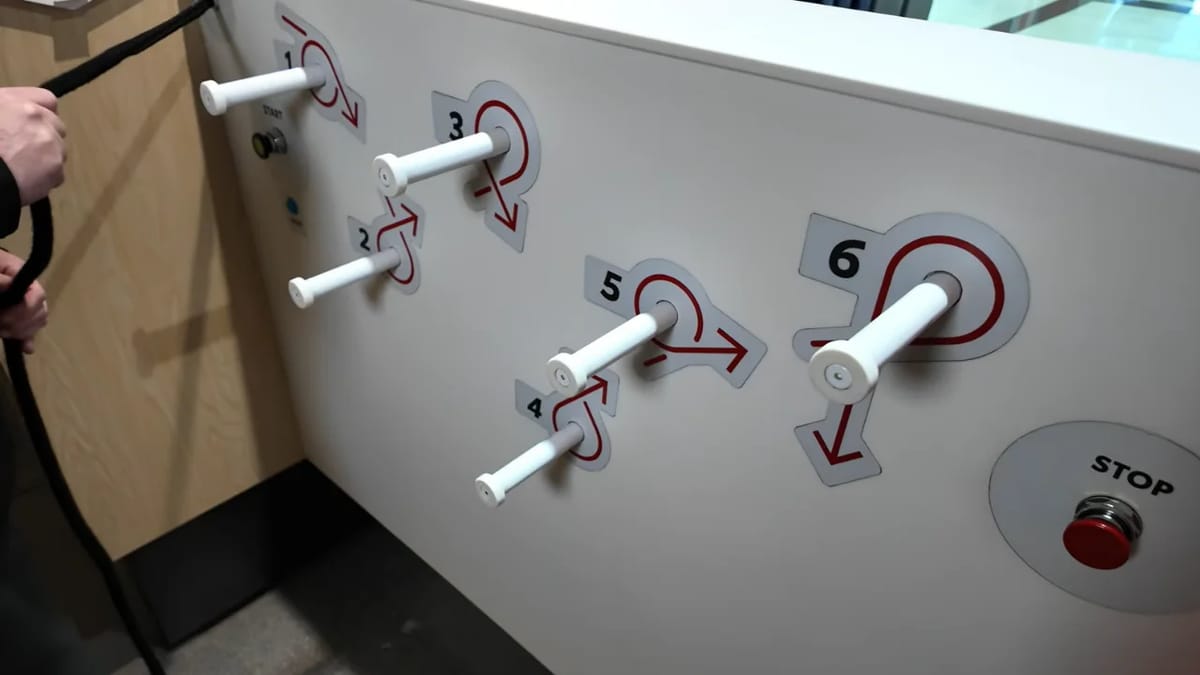
A distinctive six-second rope test, reportedly used as part of the hiring process at a new Toyota battery factory in North Carolina, has captivated online audiences. The challenge, designed to assess hand-eye coordination and manual dexterity, requires prospective employees to tie a specific knot in a short timeframe.
The test involves a candidate using both hands to thread a rope through two holes in a small metal plate, tying a knot, and then untying it, all within six seconds. This unusual approach to applicant screening has gone viral on social media platforms, with numerous users attempting the challenge themselves and sharing their results.
While the specific origins and widespread application of this test within Toyota's global hiring protocols remain somewhat unclear, its emergence at the North Carolina facility highlights an innovative approach to evaluating candidates for roles demanding precision and speed. The factory, part of Toyota Battery Manufacturing, North Carolina (TBMNC), is a crucial component of the automaker's electrification strategy in the United States, producing lithium-ion batteries for hybrid and electric vehicles.
The focus on practical, skills-based assessments like the rope test reflects a growing trend in industries where fine motor skills and quick reflexes are paramount. Traditional resume-based hiring often struggles to effectively gauge these hands-on abilities, making such practical evaluations a potentially efficient way to identify suitable candidates for assembly line roles.
Online reactions have been varied, ranging from admiration for the test's simplicity and effectiveness in identifying key skills, to amusement at its perceived difficulty. Many commenters have noted that the challenge, while seemingly straightforward, requires a level of coordination that might not be immediately apparent, underscoring the specific demands of modern manufacturing jobs.
Toyota has invested significantly in its North Carolina battery plant, with plans for substantial expansion and job creation. The facility is central to the company's efforts to localize battery production and support its ambitious goals for electric vehicle sales in North America. The viral rope test offers a rare glimpse into the practical aptitude assessments that underpin staffing for these advanced manufacturing operations.